 EP 06
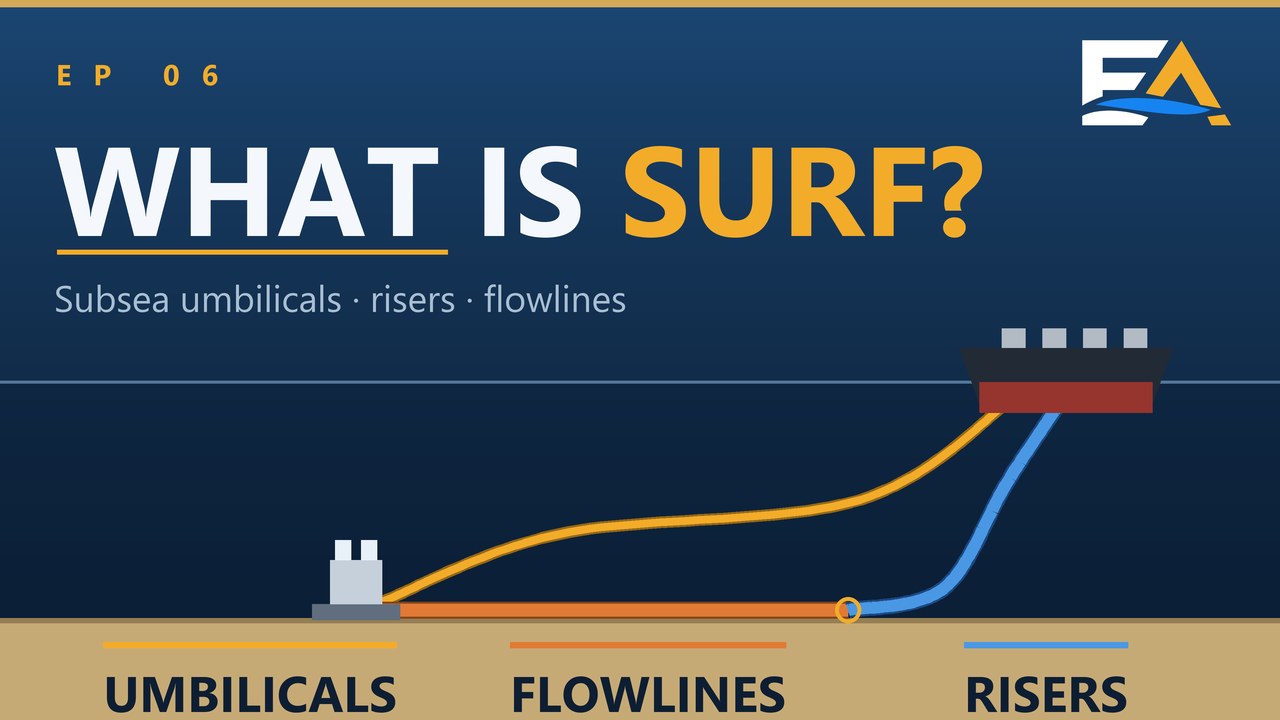
What is SURF?
The three families the acronym names, where each one lives, and why dynamic and static are classes of service rather than kinds of pipe.
Start here
Watch →
LEARN·CONNECT·GROW
Technical explainers built from our own animated diagrams — and a hub taking shape around them for the engineers, crews and companies who work below the waterline.
Technical explainers for the engineers, crews and companies who work below the waterline.
Scroll to descend · 0 m to −3,000 m
Before the descent, the map. Subsea Umbilicals, Risers and Flowlines — three families of line, one qualifier, and a boundary that decides which hardware belongs to the field and which belongs to the vessel above it. Start here if the rest of this page is new to you.
EP 06
The three families the acronym names, where each one lives, and why dynamic and static are classes of service rather than kinds of pipe.
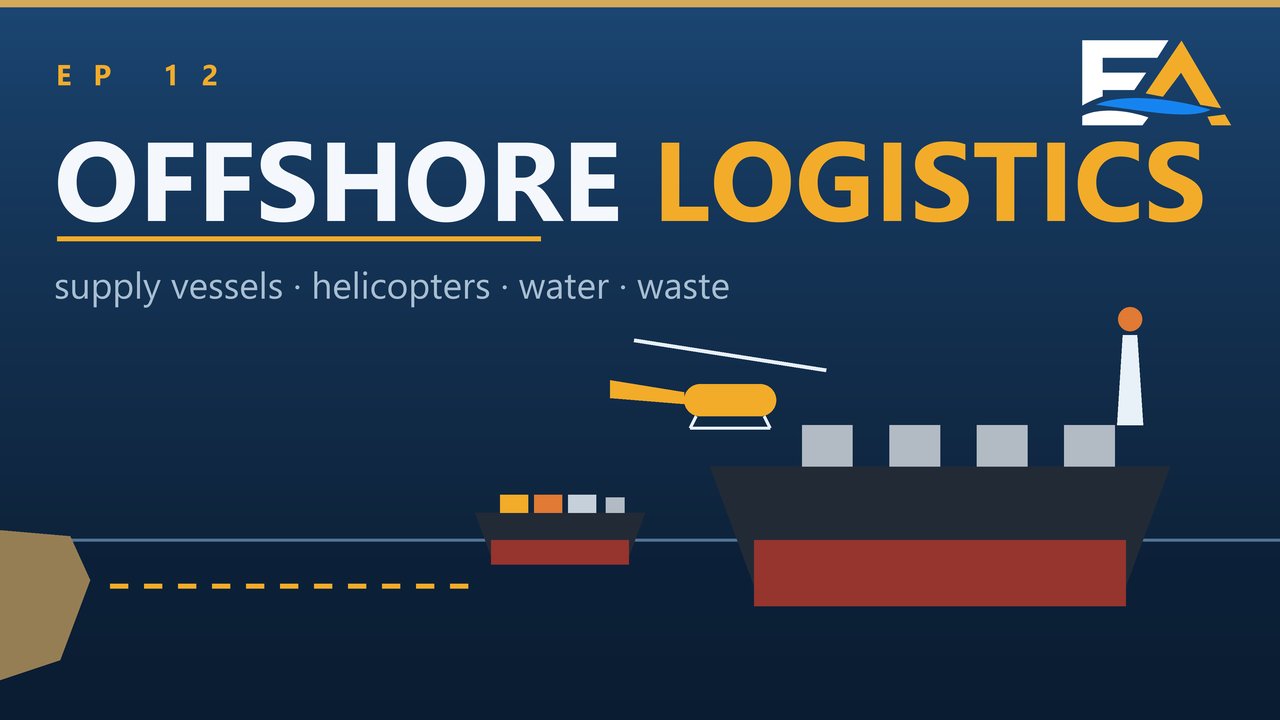
Look back up at the hull you just left. An FPSO in deep water is a factory with a hotel on top, and everything it needs comes out on a schedule: materials by sea on a platform supply vessel, people by air. What comes back is decided before it goes — over the side within a limit, down a well, or back on the supply vessel’s deck as backload.
EP 12
What the platform supply vessel (PSV) carries above and below deck, why people fly rather than sail, how much water forty to seventy people need, what MARPOL Annex V lets a platform discharge, what goes back to shore as backload, and the two streams that never ride the PSV at all.
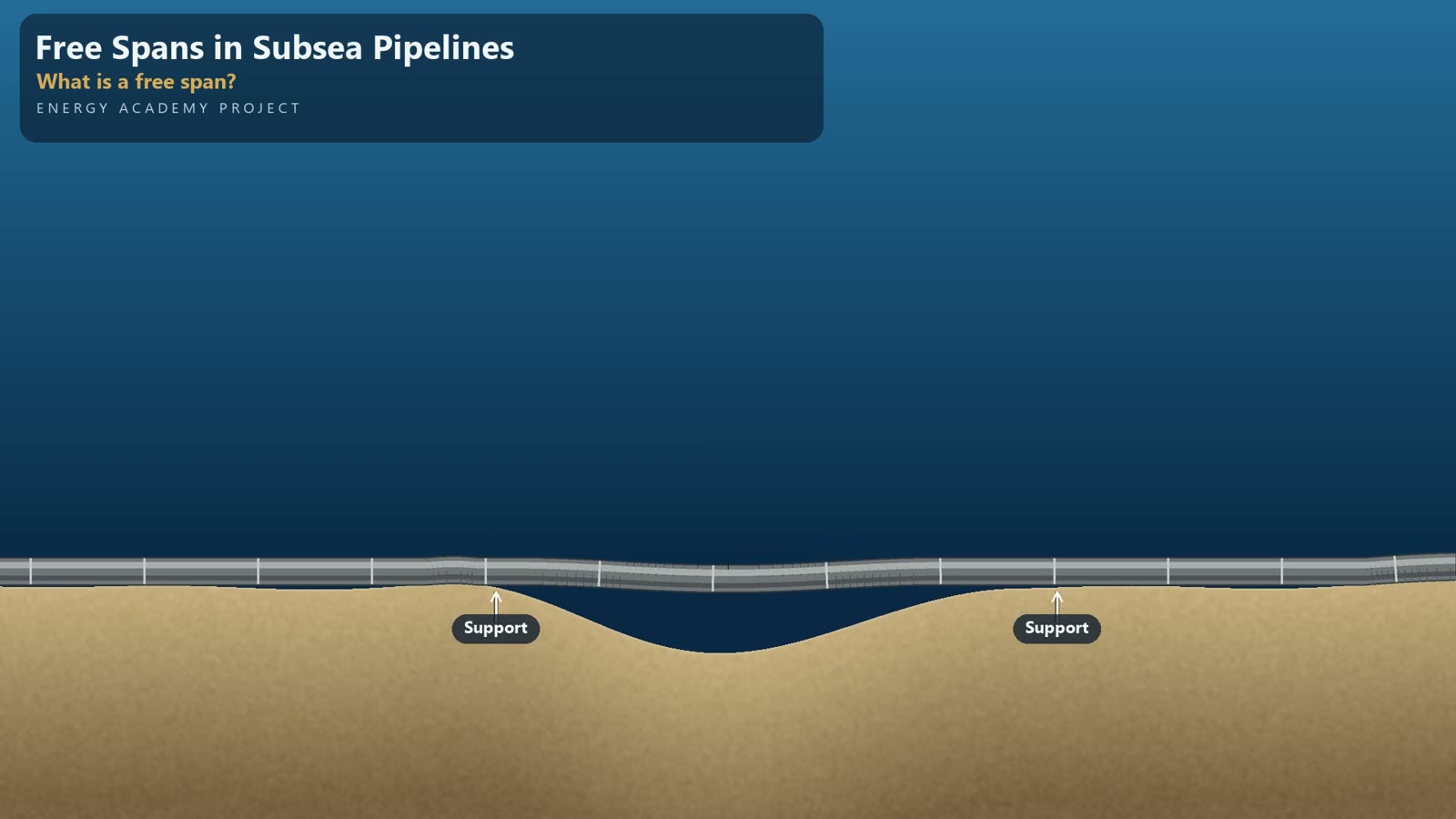
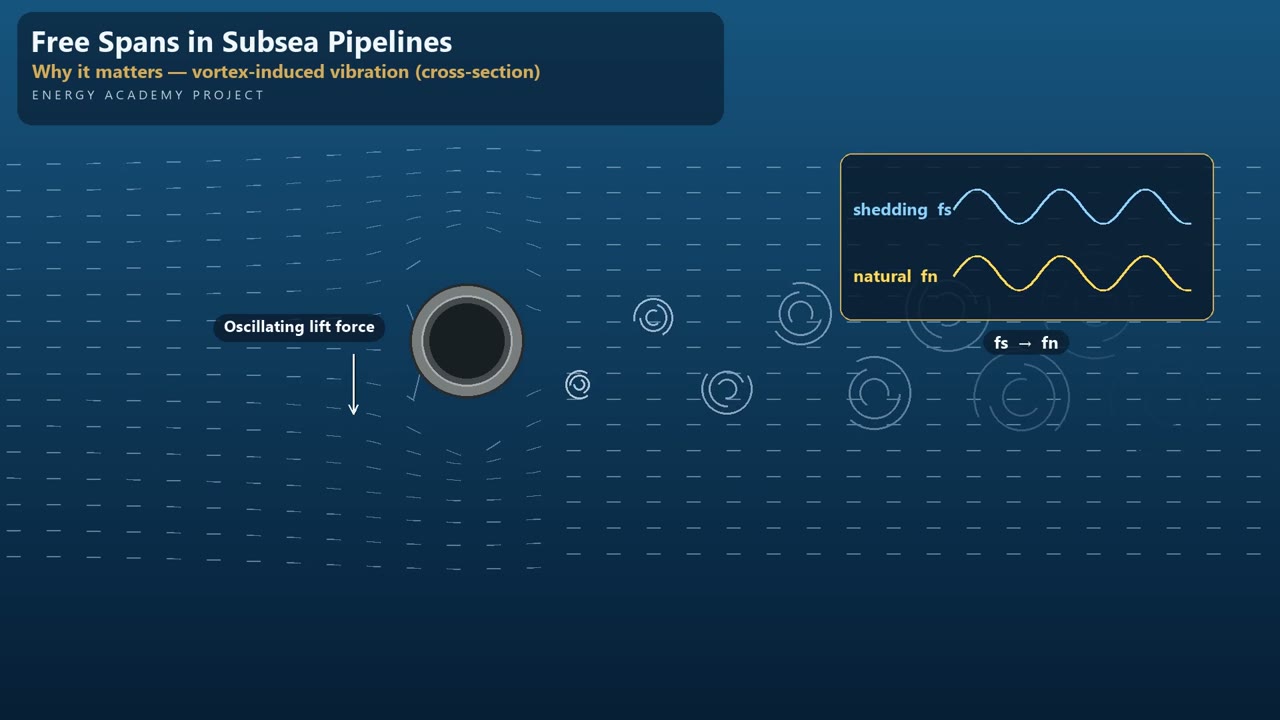
Scour, sand waves, an uneven bottom or a crossing: the support disappears and a length of pipe is left hanging. Then the current starts shedding vortices, the span vibrates at its own natural frequency, and a gap becomes a fatigue problem.
 EP 02
What a free span is, what causes one, why vortex-induced vibration matters, and how spans are assessed, inspected and corrected.
Energy Academy Project starts as a technical channel. It is being built into a hub where subsea knowledge, the people who hold it and the companies that need it meet — one phase at a time, nothing promised before it exists.
Explainers on YouTube and LinkedIn, sources credited in every episode.
Structured learning built from the topics the audience asks for most.
A curated place to find subsea suppliers, consultants and talent.
 CAR 01
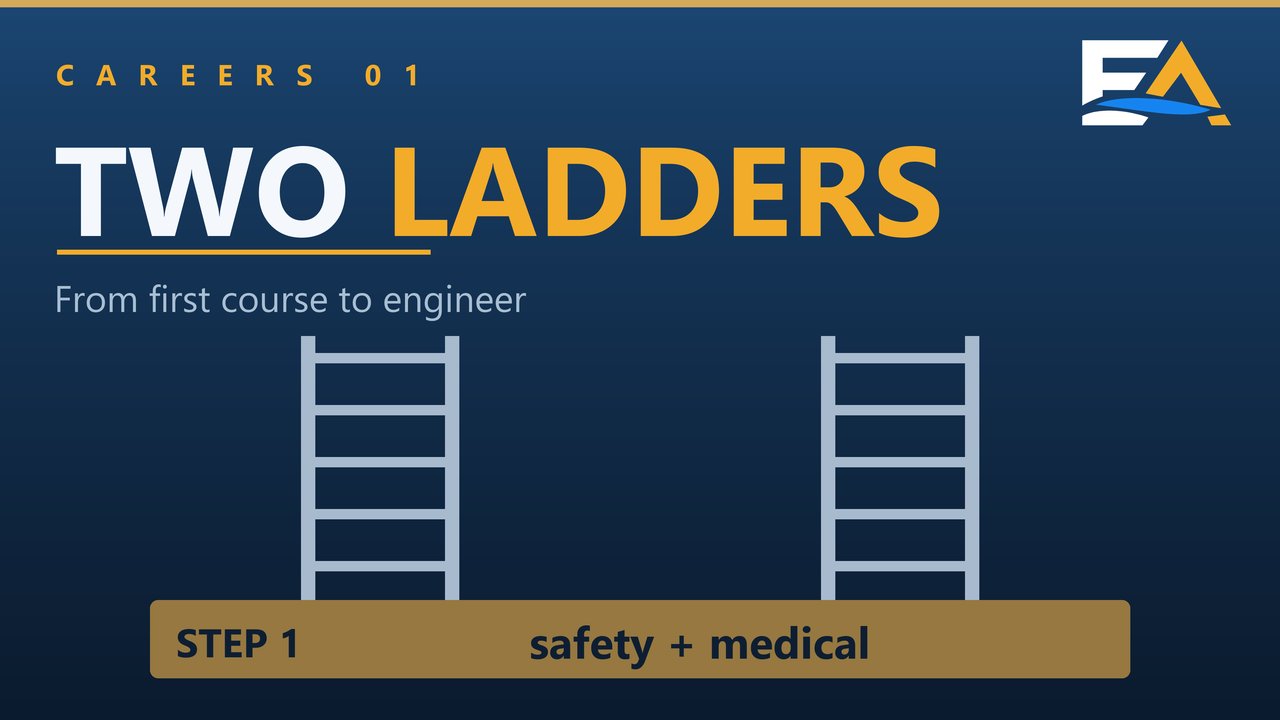
No single offshore certificate: one first step (safety training and a medical), then two ladders — grades your employer gives you, and certificates an independent body issues after an exam. Pay figures shown are national figures, not a job offer.
 CAR 02
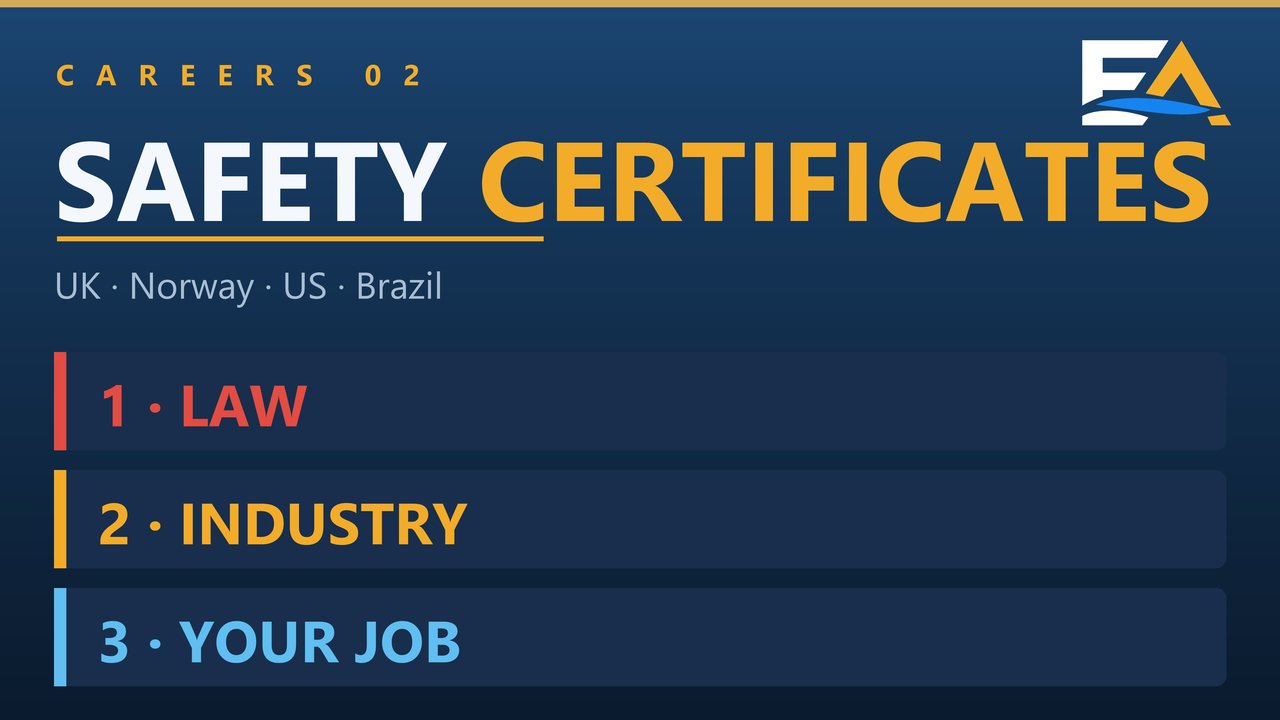
Step one of an offshore career, country by country, in three layers: the law, the industry standard and the certificate for your job. How to renew in time and check a certificate is real. Rules change: check the official source before you pay.
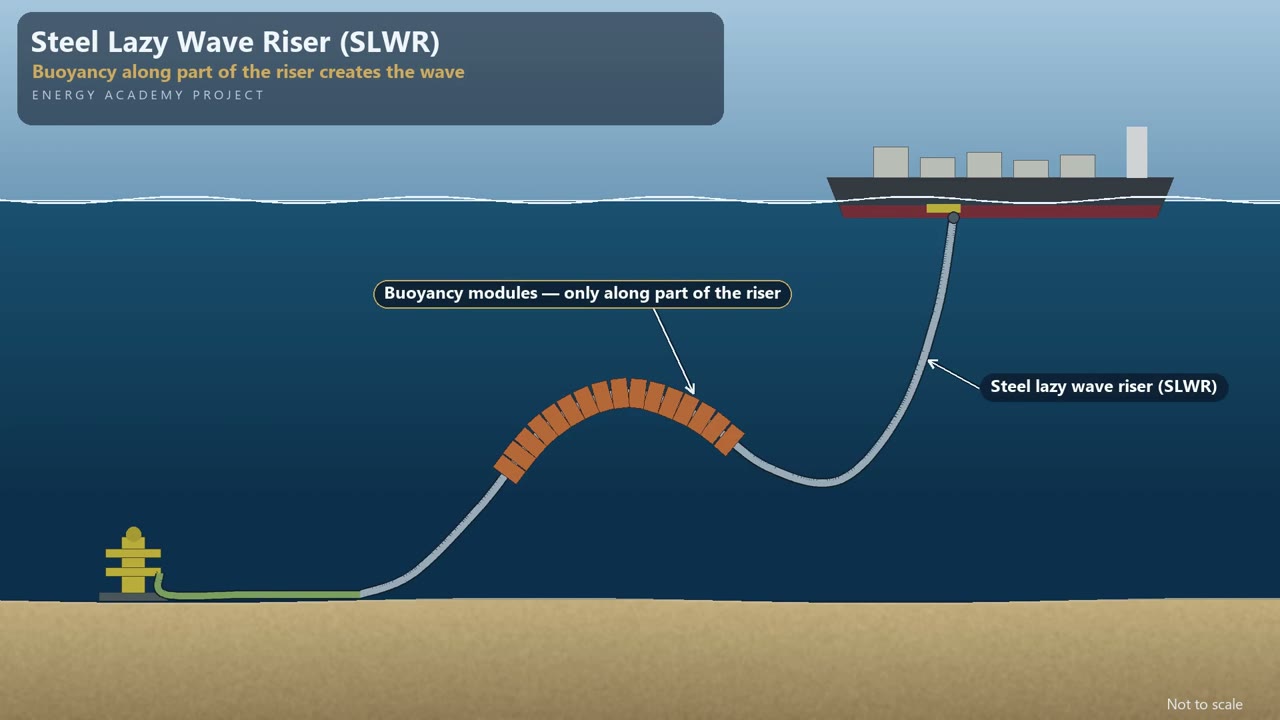
Everything the field produces, and everything that controls it, travels this stretch of water. The riser on your right follows the catenary equation; the umbilical passing the camera carries the hydraulic, electrical and chemical lines that keep the wells alive.
EP 01
Steel catenary, steel lazy wave and free-standing hybrid: how each riser is held up between the seabed and the host facility.
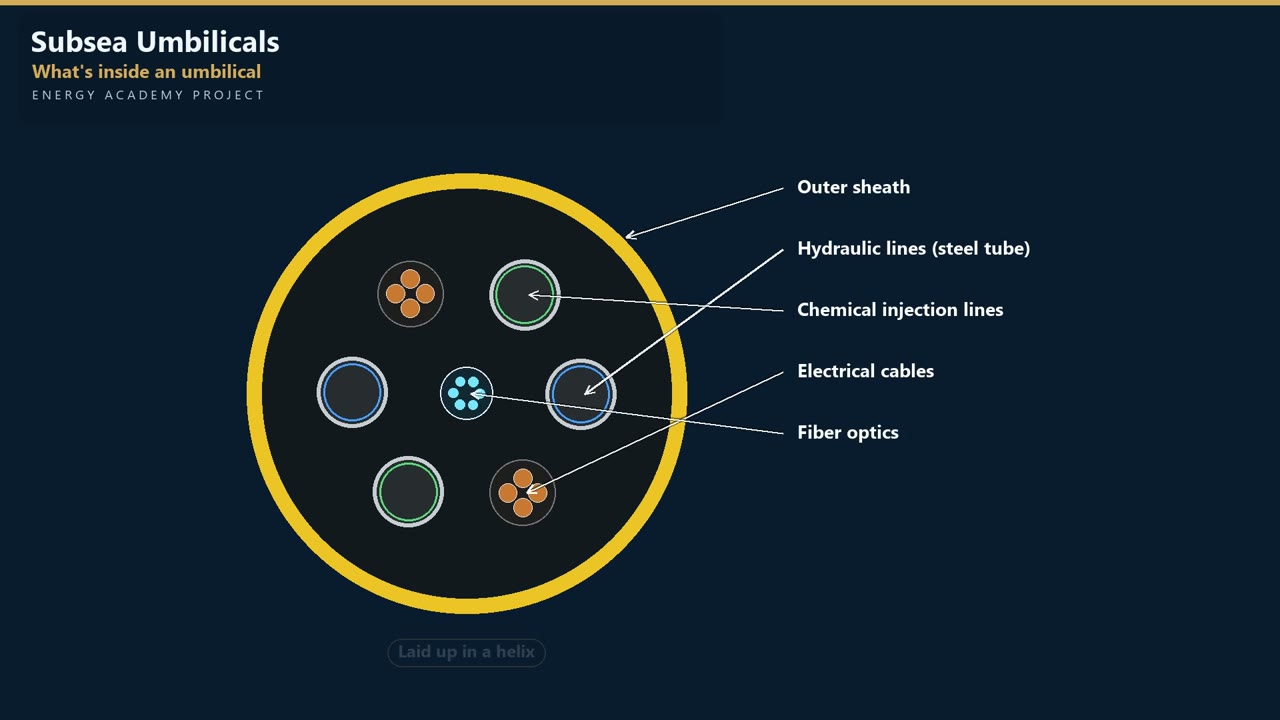 EP 03
What an umbilical carries, what is inside it, the main types and accessories, and how it is installed from a pipe laying support vessel.
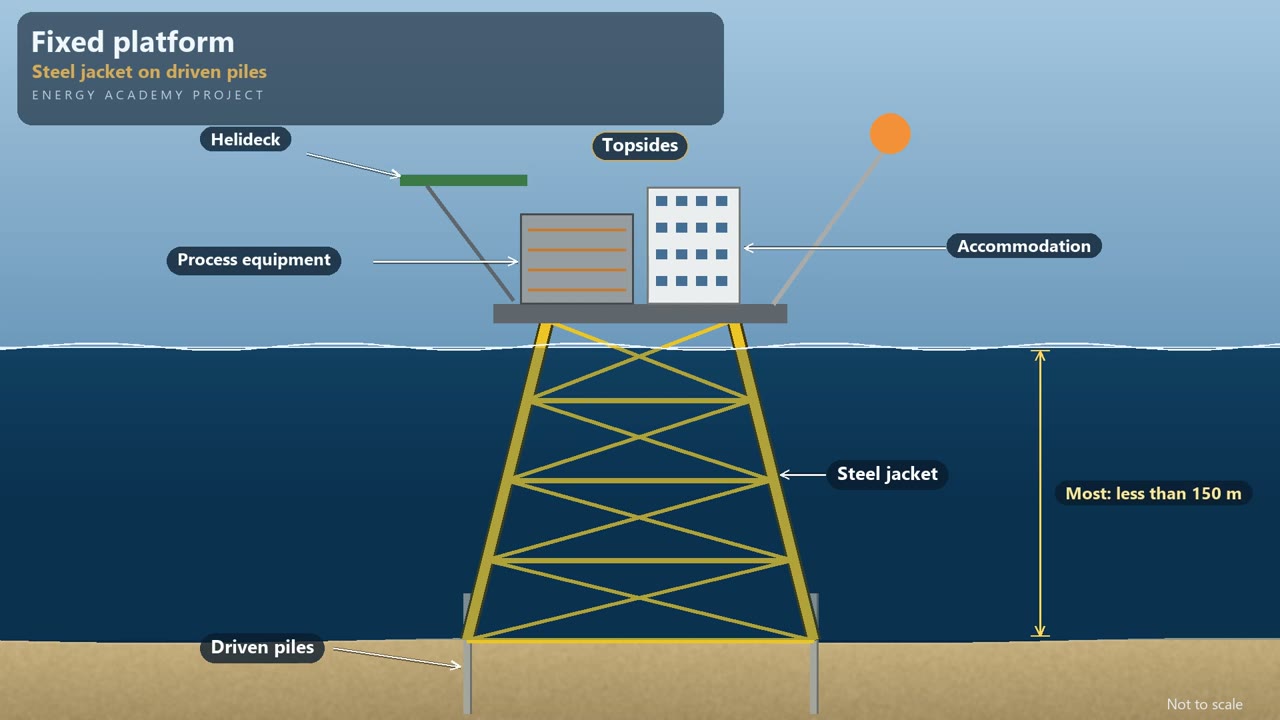
At this depth a fixed jacket is out of the question. The facility floats, and the lines running past you carry it back to suction pile anchors on the bottom. Which concept wins — semi-submersible, TLP, spar or FPSO — comes down to water depth, sea state, storage and the riser system it has to support.
EP 04
Fixed, jack-up, semi-submersible, TLP, spar and FPSO: how each one stays in place, and the criteria that point to one or another.
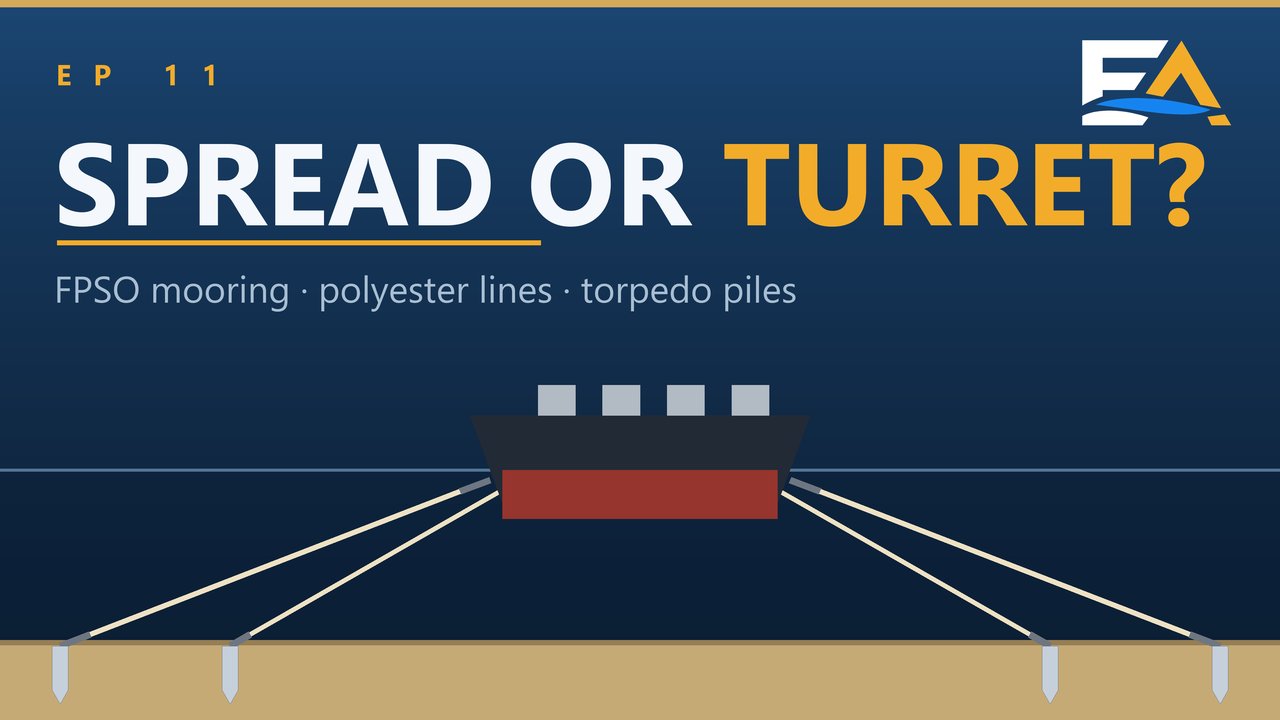
The floating facility above is held by lines like the one beside you. Follow one down: chain at the hull, polyester through most of the water column, chain again near the bottom, and an anchor that has to take the pull — dragged in, set by suction, or dropped to bury itself under its own weight. Spread or turret decides how the hull meets the weather; the risers decide how far it is allowed to move.
EP 11
Spread mooring or a turret that lets the hull weathervane, the chain–polyester–chain line, catenary versus taut legs, the three anchor types (drag anchor, suction pile, torpedo pile), what the public failure records show, and why the risers set how far the vessel can move.
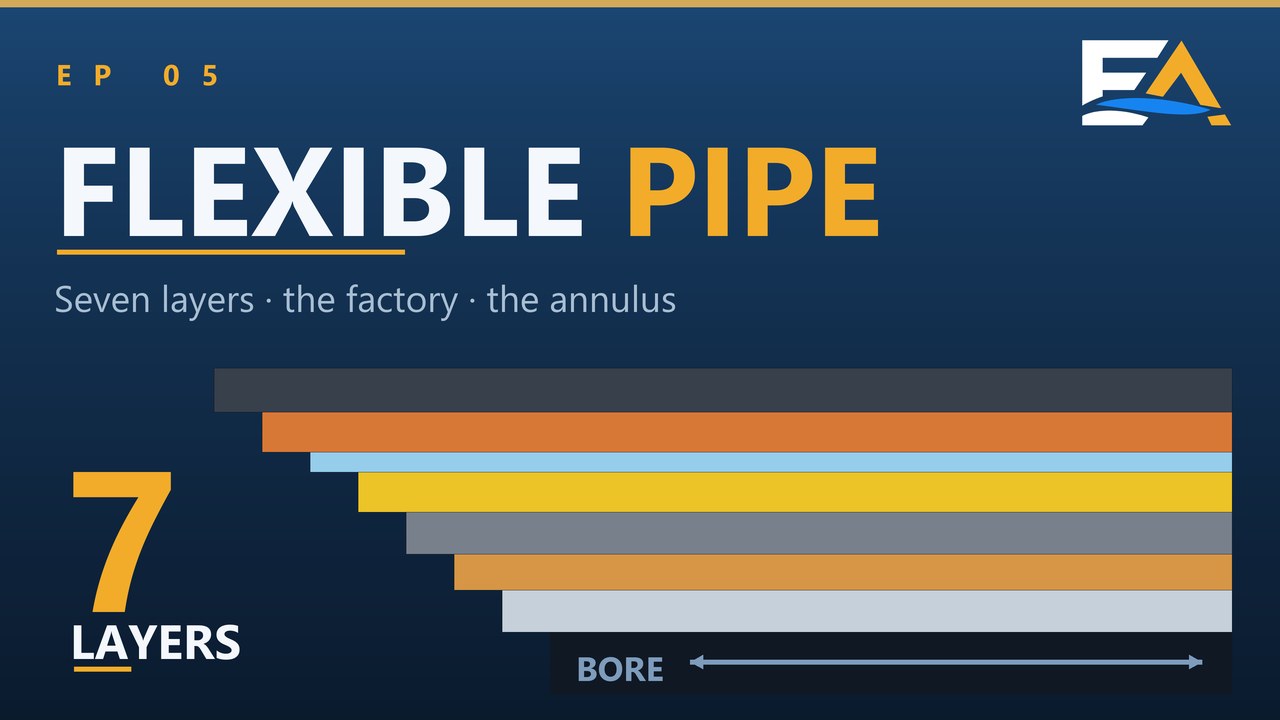
At the bottom of the column the line has to bend, spool onto a reel, hold hundreds of bar and live with carbon dioxide for twenty years. Steel alone does not do that, and neither does polymer. What does it is a wall of seven layers, each with a single job — and a vent path that has to stay open.
EP 05
Seven layers, each with one job; the factory that builds them; and the annulus, where a blocked vent — not fatigue — is what the Norwegian field records show behind loss of containment.
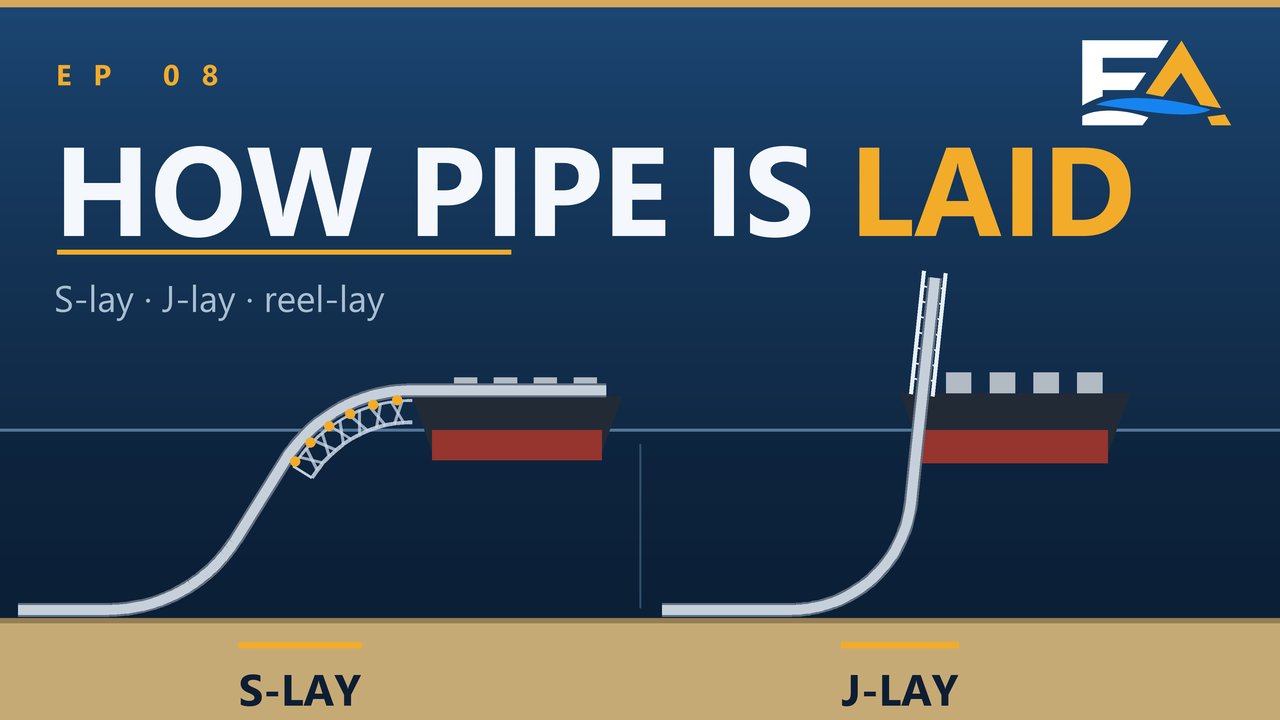
A flexible line leaves the factory finished. Steel usually does not: it is welded joint by joint on deck and eased down in an S over a stinger, stood up in a near-vertical tower so it falls in a J, or welded ashore and bent plastically onto a reel. And the old rule — S-lay for shallow water, J-lay for deep — described a fleet more than a method.
EP 08
The S-lay firing line, overbend, stinger and sagbend; the tensioner that straightens the pipe; J-lay and its tower; reel-lay and the welding moved ashore — and what really decides the method.
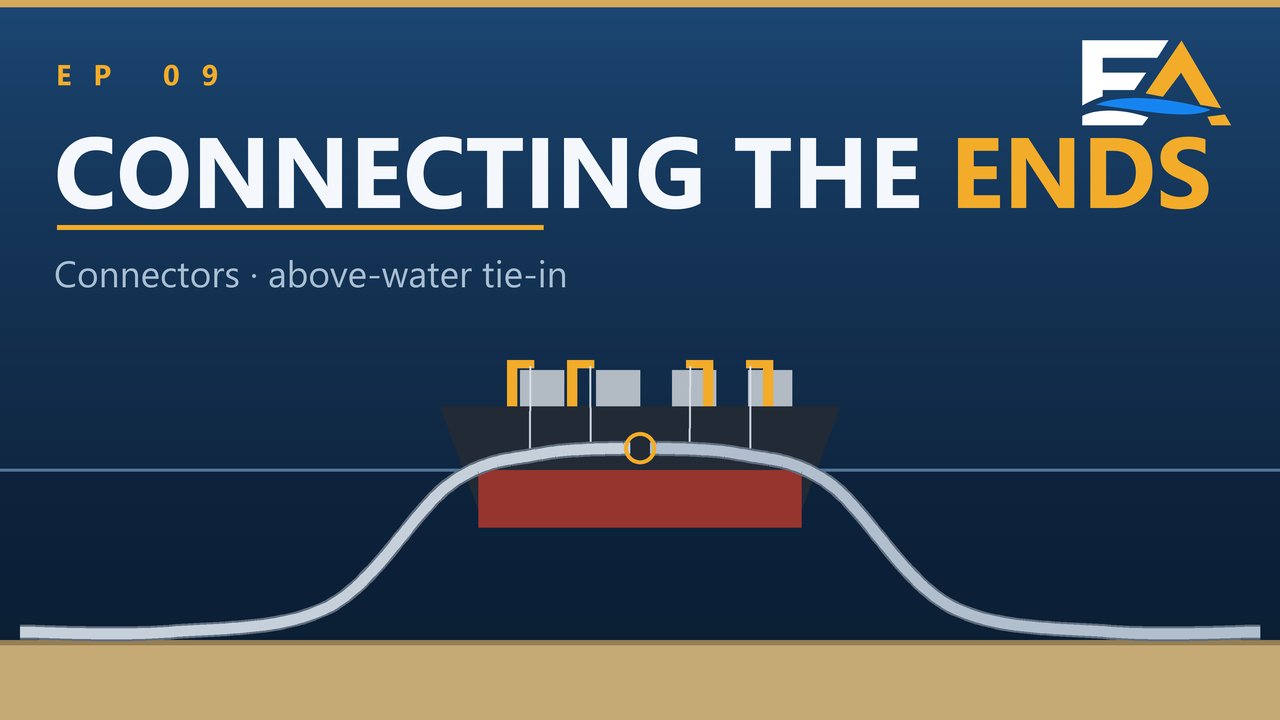
The pipe is on the seabed, and one job is left: joining it into the system. Most subsea connections are mechanical connectors, made up by divers or, in deep water, by ROV. In shallow water the two ends can even be lifted and welded on the side of the vessel. To the US regulator, the result is an obstruction on the seabed.
EP 09
What the US pipeline rule asks of a tie-in, the five families of mechanical connector and how rarely they leak, and an above-water tie-in, planned at lay-down and welded on the side of the vessel.
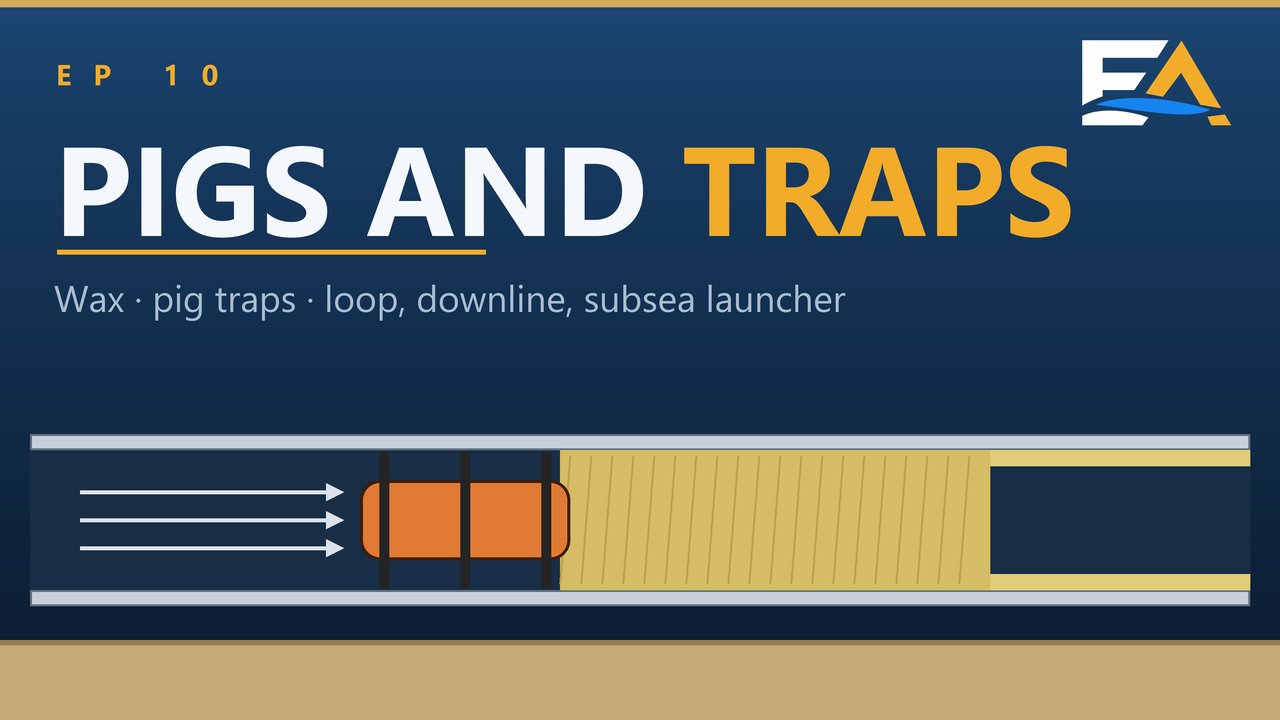
Laid and tied in, the line now has to be kept clean and inspected from the inside. That is the pig’s job: a plug pushed by the flow, scraping wax or carrying sensors. The danger has always been at the trap, the pressurised door where the pig goes in and comes out. On the seabed there is no door to stand at, so there are three other ways in.
EP 10
Why the hazard is the pig trap and not the pig, what the US offshore rule really asks of pigging, wax and the stuck pig, and the three ways a pig gets into a subsea line: a pigging loop, a downline from a vessel or a subsea launcher.
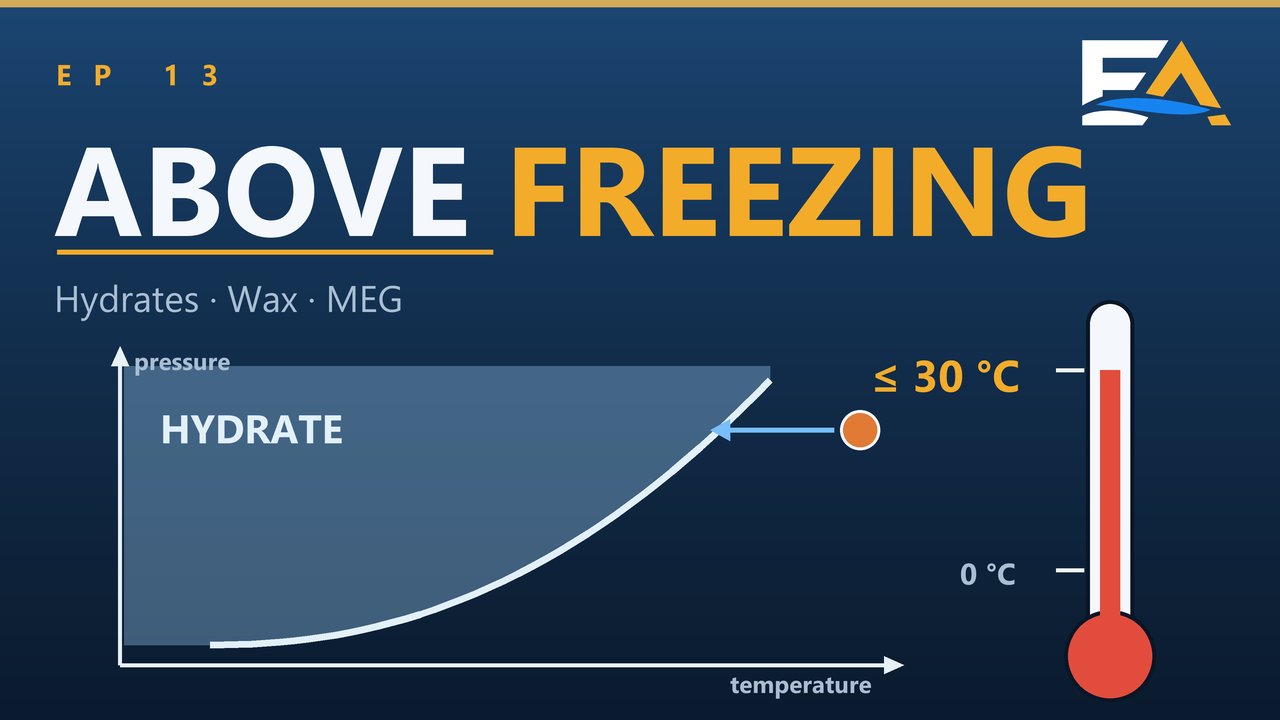
A hydrate looks like ice, but it can form well above freezing. The cold comes from the sea. The pressure does not come from the sea. It comes from inside the line: the pressure of the well and the process. When the wells are shut in, the fluid stops moving and cools towards the seabed temperature. Flow assurance keeps the fluid out of the hydrate zone with thermodynamic inhibitors, heat, lower pressure or gas dehydration. Or it slows the cooldown with insulation.
EP 13
What a hydrate is and why a subsea line meets it during a shutdown, the pressure-temperature envelope, methanol versus MEG and the MEG loop, low-dosage hydrate inhibitors, insulation and heating, wax and restart, hydrates in pressure safety valves, the Deepwater Horizon cofferdam, and how Petrobras retrieved a riser with a hydrate plug estimated at more than 500 metres.
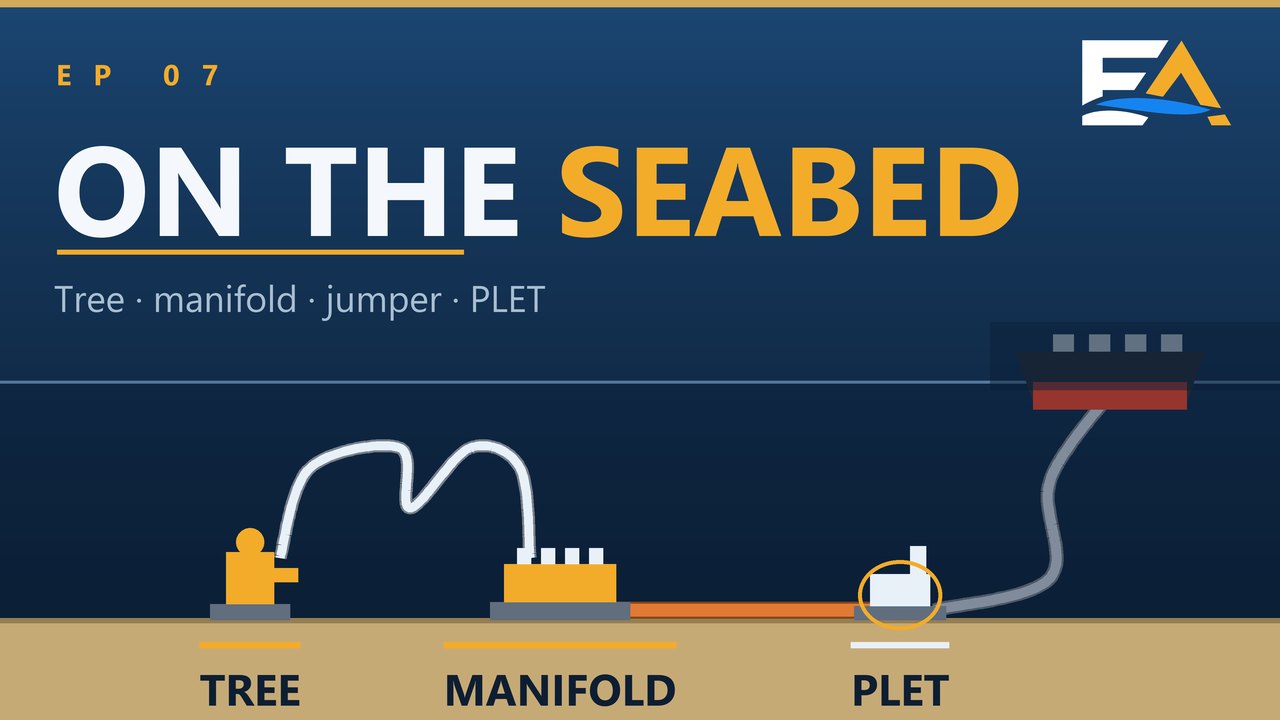
Everything above this line was a line. Here is what the lines connect to: the wellhead, the tree that controls it, the rigid jumper built with bends, the manifold that gathers the wells, and the flowline that leaves — ended by a PLET, which is not a PLEM. Bought as one package, SPS, next to the SURF package the descent has followed all the way down.
EP 07
From the wellhead through the tree, the jumper and the manifold to the flowline and the PLET that ends it — and why PLET is not PLEM.
−3,000 m · Seabed
We are planning structured courses that go deeper than the episodes. Tell us what you need and you will be the first to know when enrolment opens.
A curated directory of subsea suppliers, service companies and consultants, plus training for teams. Register your interest now and we will contact you before launch.
A company profile by category and region: engineering, installation, inspection, fabrication, consulting and training.
Onboarding and fundamentals for new hires and cross-discipline teams.
Connecting companies with the right supplier or specialist, under transparent rules.
Energy Academy Project is a subsea and offshore education initiative run by working practitioners. Our audience works in the industry and spots a technical mistake immediately, so accuracy comes first.
Behind it are inspection, welding and installation professionals with decades of field experience on offshore and EPCI projects. We keep them unnamed while current employment ties stand — the work is signed by the project, not by individuals.
Energy education today. A stronger tomorrow.
AI-generated footage
Questions, topic suggestions, partnerships or corrections. We read everything.